
Why I'm Building a Sock Brand to Fight Child Abuse
A year of neuroscience research taught me that small, predictable acts of care can rewire young brains. So I created posu. to prove it.
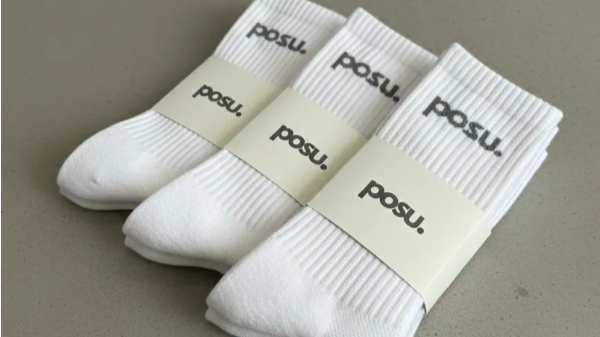
The Crew Sock Bundle, posu. Shop here.
Here's what they don't tell you about working in regional mental health: you get really good at spotting patterns. The 15 year old who's attempted suicide three times. The kid who can't maintain eye contact. The one who flinches when you move too quickly. You start seeing the invisible threads that connect childhood trauma to every crisis that follows.
And then you realise the system isn't designed to cut those threads. It's designed to respond after they've already strangled someone.
So I spent a year buried in neuroscience journals, attachment theory, and trauma research, asking one question: what if we could intervene before the crisis? What if something as simple as a pair of socks, delivered predictably every month, could actually rewire a traumatised young brain?
That question became posu. Pull Our Socks Up. And yes, I know how it sounds. A sock brand tackling child sexual abuse? But stay with me, because the science behind this is solid.
Let's talk about what trauma does to developing brains.
When kids experience abuse, their nervous systems learn that the world is unpredictable and dangerous. This isn't just psychological, it's biological. Stephen Porges' polyvagal theory shows us that traumatised children get stuck in survival mode, their nervous systems constantly scanning for threat. They can't learn, connect, or regulate emotions properly because their brains are too busy trying to keep them alive.
Attachment theory tells us these kids develop what John Bowlby called "insecure internal working models", basically, a blueprint that says people can't be trusted, needs won't be met, and safety doesn't exist. These blueprints shape everything: relationships, self worth, the ability to ask for help.
And here's the kicker: in Australia, we're talking about 1 in 4 people who've experienced child sexual abuse. When I'm sitting across from that 15 year old in crisis, I'm not seeing an individual tragedy. I'm seeing a predictable outcome of a childhood where their nervous system learned the world is hostile and their needs don't matter.
““The silence around child abuse isn’t neutral. It’s structural. And it’s killing kids.””
Now connect that to youth crime, because nobody wants to, but we have to. The Adverse Childhood Experiences (ACEs) research is clear: trauma doesn't just increase suicide risk, it increases the likelihood of every poor outcome you can think of. Substance abuse. Incarceration. Homelessness. We love to talk about "youth offenders" like they're a separate species, but most of them are just kids whose nervous systems never learned what safety feels like.
We can either keep funding crisis response, or we can start building the neurobiological conditions for resilience before the crisis hits.
This is where the socks come in.
I know it sounds absurdly simple, but that's the point. Research on therapeutic relationships shows that healing doesn't come from big interventions, it comes from small, consistent, predictable acts that signal safety. When a young person receives something tangible, every single month, without having to earn it or prove they deserve it, their nervous system starts to learn a different pattern.
The sock becomes what attachment researchers call a "transitional object", a physical anchor to the idea that someone is thinking about them, that their needs matter, that care can be reliable. Over time, this predictability starts rewiring those insecure internal working models. It's not therapy, but it creates the neurobiological foundation that makes therapy possible.
This is what the Sock Pilot tests. Monthly sock deliveries to at risk young people, paired with simple check ins, to see if this kind of low barrier, high consistency care can measurably impact wellbeing and reduce suicide risk. The neuroscience says it should work. The attachment theory says it should work. Now we need to prove it does.
But posu. isn't just the pilot. It's a brand built on the idea that everyday objects can carry social justice. Every pair of socks sold funds the pilot, supports Bravehearts' prevention programs, and starts conversations Australia desperately needs to have about child safety.
““We’re not just selling socks. We’re building the neurobiological infrastructure for a generation of kids to believe they matter.””
Here's what I need you to understand: this whole thing is grounded in a year of comprehensive research. I've reviewed the literature on neuroplasticity, polyvagal theory, attachment interventions, and trauma informed care. I've mapped the gap between what the science says works and what our systems actually do. And I've designed something that sits in that gap, small enough to be scalable, evidence based enough to be rigorous, and human enough to actually reach kids the system has already failed.
The full research paper will be published soon, peer reviewed and public, because I want other people to build on this. I want youth workers, psychologists, community organisations to see that you don't need a million dollar budget to create interventions grounded in neuroscience. You just need to understand how brains heal, and you need to give a damn.
I'm frustrated. I'm exhausted. I've sat through too many crisis meetings about kids who didn't have to be in crisis. But I'm also weirdly optimistic, because the research is clear: small, consistent acts of care work. They change brain architecture. They build resilience. They save lives.
So yeah, I'm building a sock brand. Because when the systems fail, you build something new. And sometimes the most radical thing you can do is prove that caring consistently, in small, tangible ways, is enough to shift the trajectory of a young life.
That's posu. That's the science. And that's why I'm all in on socks.
Research Note: This work is grounded in a comprehensive literature review examining attachment theory (Bowlby, 1969), polyvagal theory (Porges, 2011), neuroplasticity research, and trauma informed care frameworks. The full academic paper will be available following peer review and publication. If you're a researcher, clinician, or organisation interested in collaborating, reach out.
